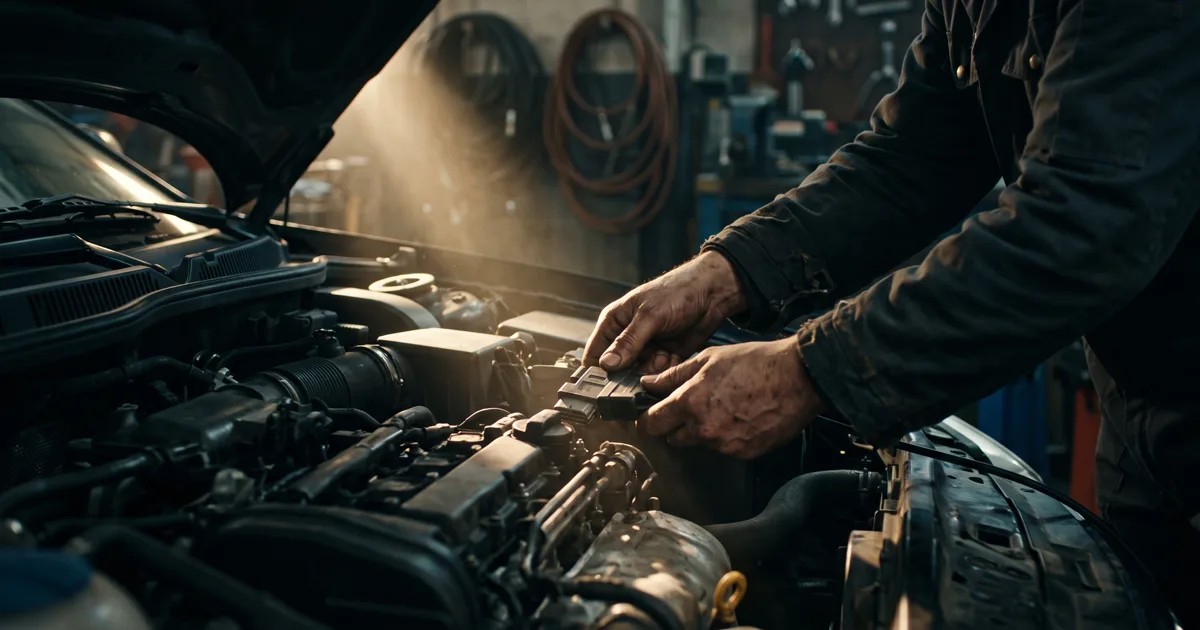
This VW T5 1.9 TDI came in with over 250,000 miles on the clock. Still going strong, still doing its job, but very much showing its age underneath.
The exhaust was barely holding together and the turbo was starting to stick. Nothing unusual on a high-mileage T5, but exactly the point where doing nothing starts to cost more than fixing it properly.
Sorting the hardware first
Before any tuning, the exhaust had to be dealt with. We fitted a custom twin stainless steel exhaust system with single oval tailpipes on each side. Built to last, tidy in appearance, and strong enough to see the van through many more years of use.
Stainless isn’t about noise or showing off on a van like this. It’s about durability, fitment, and not having to worry about it again.

Health checks on the MAHA rolling road
With the exhaust sorted, the van went onto our MAHA rolling road for checks and testing. The turbo was a little sticky, which isn’t uncommon at this mileage, so we ran it through a few pulls to free things up before moving on.
Baseline figures came out at 104bhp and 230Nm of torque. That explains why the van felt tired, especially under load.

Only once everything behaved as it should did we move on to software.
Pendle remap done properly
We uploaded software from Pendle Performance, written to suit the condition and use of the vehicle, not chase headline numbers.
Final results came out at 143bhp and 314Nm of torque. Sensible gains, safely delivered, and exactly what a high-mileage T5 benefits from.
Volkswagen T5
1.9 TDIMore torque low down, smoother drive, and far less effort needed in everyday use.
The kind of upgrade that makes sense
This wasn’t about turning an old van into something it isn’t. It was about extending its life, improving how it drives, and making it enjoyable again.
That’s the reality for a lot of T5 owners. Keep it maintained, upgrade the weak points properly, and it’ll keep earning its keep for years.
If your T5 is feeling tired, rattly, or just past its best, it’s worth knowing what can be done before giving up on it.
A Few Quick Answers to Your Questions
Is it worth remapping a VW T5 with over 250,000 miles?
It can be, if the van is healthy and checked properly first. Mileage matters less than condition, so diagnostics and a proper health check are essential before any tuning.
What difference does the extra torque make on a T5?
Torque is what you feel day to day, especially pulling away, climbing hills, and driving with a load. A sensible torque gain makes the van feel less strained and more relaxed.
Do you need a rolling road session for a T5 remap?
It’s the safest way to confirm the van is behaving properly before and after. A rolling road run can highlight issues you might not notice on a short road test.
Can a sticky turbo be fixed during a remap visit?
Sometimes it can improve with careful testing and repeated runs, especially if it’s sticking from use patterns rather than damage. If it doesn’t behave consistently, tuning should pause until the cause is identified.
Will a custom stainless exhaust make my T5 louder?
Not necessarily. A well-built system can keep noise sensible while improving fit, longevity, and overall quality compared to a tired, leaking exhaust.
Are the power gains on a high-mileage T5 meant to be “safe” rather than extreme?
Yes, the goal is a stronger, smoother drive without pushing worn components beyond what makes sense. Sensible gains are usually the sweet spot for older vans that still need to be reliable.
Could a remap help fuel economy on a VW T5 1.9 TDI?
It can, depending on driving style and the van’s condition. If the engine is working less hard to do the same job, steady cruising often improves.