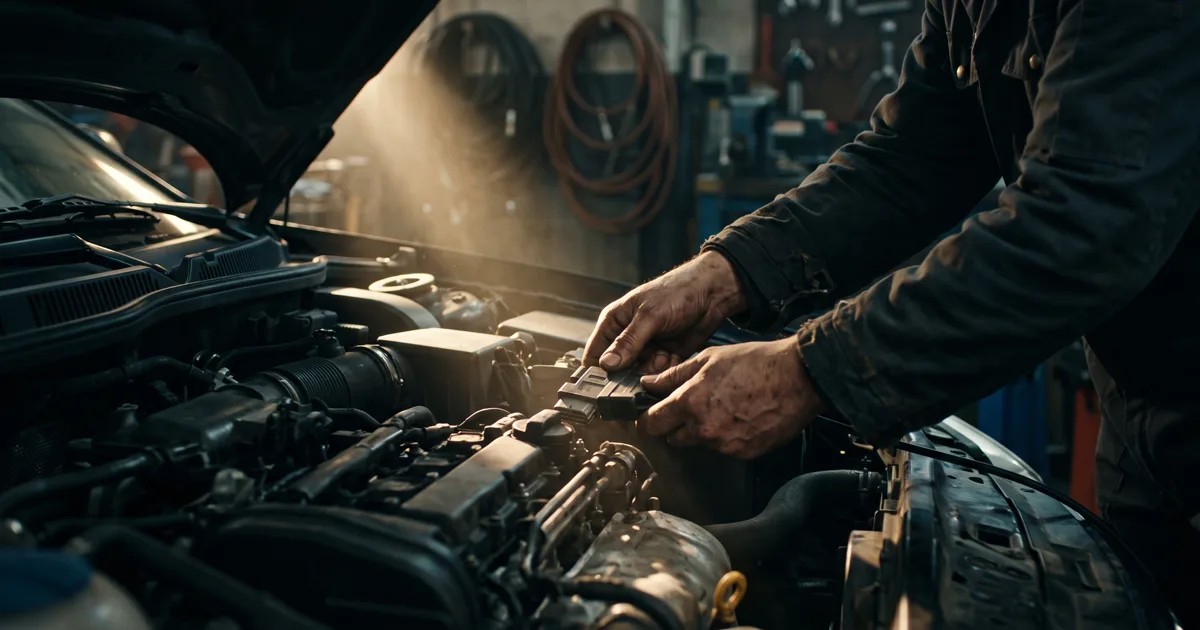
Your engine is holding back. Not because it can’t do more, but because the manufacturer decided it shouldn’t. When a car rolls off the production line, its ECU (Engine Control Unit) arrives with conservative factory settings designed to suit every climate from Finland’s frozen winters to Australia’s scorching summers. These settings prioritise warranty claims and fuel quality variations over what your engine can truly achieve on British roads.
What Actually Happens During Remapping
Remapping, also called ECU tuning or chip tuning, involves rewriting the software that controls how your engine operates. A technician connects specialist equipment to your vehicle’s OBD (On-Board Diagnostics) port, reads the existing factory map, then uploads an optimised version tailored to your specific vehicle.
The modified software adjusts critical parameters including fuel injection timing, air-fuel ratios, ignition timing, and turbocharger boost pressure (on turbocharged engines). These aren’t guesses or generic templates. At PP Tuning, we use Pendle Performance remapping opens in a new tab, where each map is created specifically for your individual vehicle’s requirements after gathering live data.
The Power Gains: More Than Just Numbers
Turbocharged diesel engines respond particularly well to remapping, often achieving 20-40% increases in both brake horsepower and torque. A VW T5.1 that recently visited our workshop arrived with factory settings delivering 140bhp. After a Pendle remap and DPF regeneration, that same engine produced 166bhp and 331nm of torque, with smoother, more progressive power delivery throughout the rev range.
The transformation isn’t just about peak figures on a dyno printout. Remapping eliminates frustrating flat spots where the engine feels hesitant, sharpens throttle response so the vehicle reacts immediately to your inputs, and delivers stronger mid-range pulling power that makes overtaking safer and more confident.
How Remapping Actually Improves Fuel Efficiency
This might seem contradictory. More power surely means worse fuel consumption? Not necessarily. The key lies in how the remapped engine delivers that extra torque.
By refining fuel burn efficiency and making more torque available at lower revs, a properly executed remap means fewer gear changes and less time with your right foot buried in the carpet. You’re not working the engine as hard to achieve the same results. Many drivers report 10-15% improvements in miles per gallon after remapping, particularly on turbo diesel engines.
An Audi A3 TDI that came to us originally producing 150bhp left with 195bhp and 405nm torque after its Pendle remap. The owner now enjoys significantly improved performance whilst maintaining, and in many driving conditions improving, fuel economy. That’s the overlap between power and efficiency done properly.
The Overlap: Safety, Reliability and Longevity
Professional remapping doesn’t push your engine beyond safe limits. Manufacturers leave considerable headroom in their ECU calibrations, partly for the global market variations mentioned earlier, and partly to create tiered model ranges from the same engine.
A quality remap from specialists like PP Tuning and other Pendle Performance agents opens in a new tab works within the engine’s capabilities, extensively tested and perfected before being uploaded to your ECU. The software adjustments respect thermal management and mechanical tolerances whilst extracting the performance your engine was always capable of delivering.
Making It Work for Your Vehicle
Whether you drive a VW Transporter used for heavy loads and towing, an Audi saloon for motorway miles, or any modern turbocharged vehicle, remapping offers tangible benefits you’ll notice every time you drive. The process typically takes a couple of hours and is completely reversible if your circumstances change.
Choose a proper engine remapping specialist who uses bespoke mapping rather than generic off-the-shelf files. Your engine deserves individual attention, not a one-size-fits-all approach that ignores your vehicle’s specific mileage, condition and requirements. That’s the difference between a remap that transforms your driving experience and one that creates problems down the road.
Things You Need to Know About Remapping
Will remapping harm my engine or reduce its lifespan?
Professional remapping from specialists like Pendle Performance works within your engine’s safe operating limits. Manufacturers build considerable headroom into their ECU calibrations for global markets and warranty protection. A quality remap simply unlocks the performance your engine was always capable of delivering whilst respecting thermal management and mechanical tolerances. With over 20 years of development and testing, Pendle Performance ensures each map is extensively perfected before being uploaded to your vehicle.
How much power can I expect from remapping my vehicle?
Turbocharged diesel engines typically see the most impressive gains, often achieving 20 to 40 percent increases in both brake horsepower and torque. Petrol turbocharged engines also respond well to remapping. The exact gains depend on your specific vehicle, engine type, and current state of tune. At PP Tuning, we use Pendle Performance bespoke mapping tailored to your individual vehicle after gathering live data, rather than generic off-the-shelf files that ignore your engine’s specific requirements.
Can remapping really improve fuel economy as well as power?
Yes, properly executed remapping often delivers both benefits simultaneously. By optimising fuel burn efficiency and making more torque available at lower engine speeds, you’ll find yourself changing gear less frequently and using less throttle to achieve the same results. Many drivers report 10 to 15 percent improvements in miles per gallon after professional remapping, particularly on turbocharged diesel engines. The key lies in how the remapped engine delivers that extra pulling power throughout the rev range.
Is remapping reversible if I need to return the vehicle to standard?
Absolutely. The remapping process is completely reversible. If your circumstances change, perhaps due to warranty considerations or selling the vehicle, the original factory map can be reinstalled. The process involves reading and storing your vehicle’s existing factory software before uploading the optimised version, so returning to standard settings is straightforward. This flexibility gives you peace of mind when choosing to enhance your vehicle’s performance.
How long does the remapping process take?
A typical remap takes approximately two hours from start to finish. This includes connecting specialist equipment to your vehicle’s OBD port, reading the existing factory map, uploading the optimised bespoke software, and conducting post remap checks. Some vehicles may require additional work such as DPF regeneration before remapping, which can extend the time needed. At PP Tuning, we ensure every step receives proper attention rather than rushing the process.
What’s the difference between generic remaps and bespoke Pendle Performance mapping?
Generic remaps use one size fits all files that ignore your vehicle’s individual mileage, condition, and specific requirements. Pendle Performance creates each map specifically for your vehicle after gathering live data and conducting thorough diagnostics. This bespoke approach ensures optimal results tailored to your engine’s actual capabilities rather than applying a template designed for a completely different vehicle. That individual attention makes the difference between a remap that transforms your driving experience and one that creates problems.
Sources
Engine & Gearbox Remapping for Performance & Efficiency
pptuning.co.uk
Sorting Out the Chaos for a VW T5: A Tune-Up Journey
pptuning.co.uk
Pendle Performance – A UK-Based Vehicle Tuning Company opens in a new tab
pendleperformance.com
Custom Remaps in Newcastle: Experience Tailored Performance opens in a new tab
newcastleremap.co.uk
Top Benefits Of ECU Remapping For Your Car’s Performance opens in a new tab
paramount-performance.com